A Legacy of Jain Devotion and Spiritual Upliftment in Nairobi
Shri Digambar Jain Mumukshu Mandal, Nairobi
The Shri Digambar Jain Mumukshu Mandal was established on 4th June 1950 through the primary inspiration of Shri Khimchand Virpar Shah, the brother of Kakabhai Singhan, with the objective of conducting religious activities according to the traditions of the Ranatna Digambar Jain Dharma and to spiritually uplift devoted seekers (Mumukshus).
About Us
In its early years, the Mandal’s religious activities were held in the hall of the Jain Shala of the Visa Oshwal community. About 14 years later, on 5th January 1964, the foundation stone for the Swadhyay Mandir was laid by Shri Ramji Devraj Shah under the guidance of Pandit Shri Devsibhai from Rajkot. Due to the efforts of the senior leaders of the Mandal, the dream of every Mumukshu was fulfilled within just seven months with the completion of the Swadhyay Mandir. The inauguration ceremony of the Swadhyay Mandir took place on 30th August 1964, performed by Shri Fulchand Karamshi Shah. Regular morning and evening darshan, pooja, bhakti readings, scripture study, and listening to spiritual discourses of Pujya Gurudev Shri Kanji Swami became part of the Mandal’s vibrant spiritual routine.
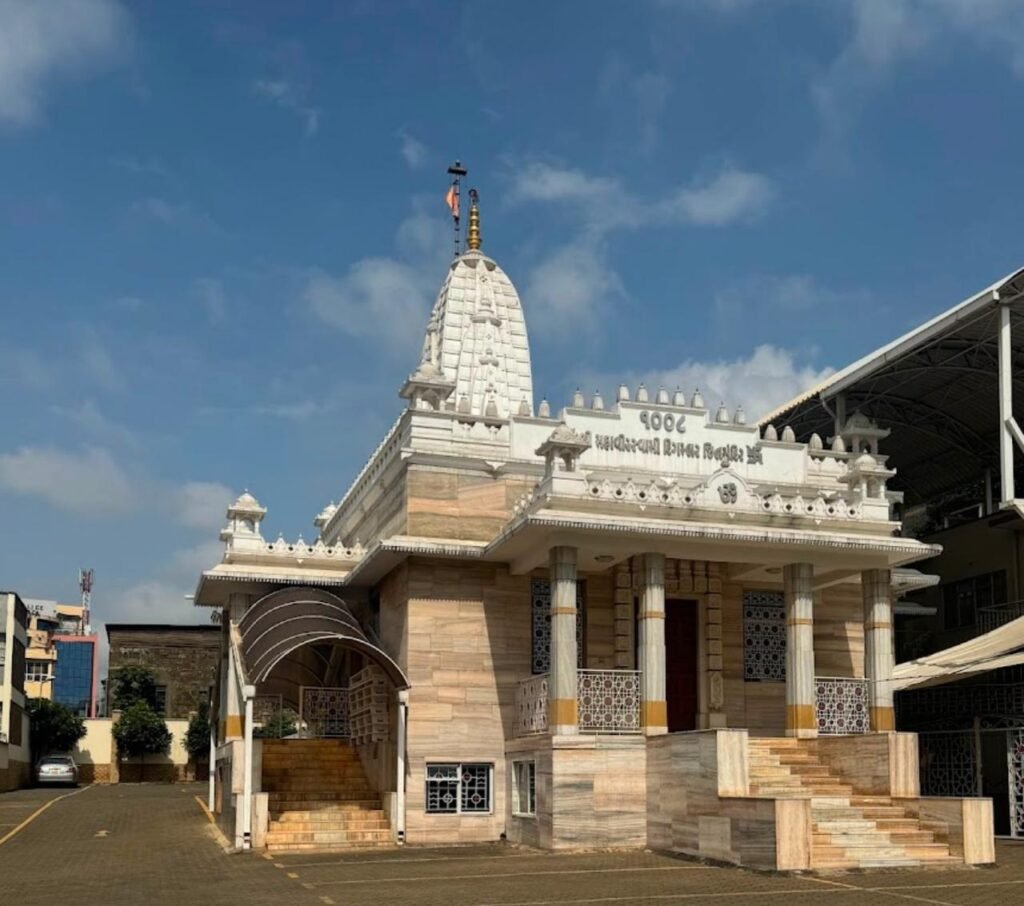
As a small plant grows and blossoms, so too did the Mandal’s activities and enthusiasm flourish. This eventually led to the inspiration to build a Shikharbandhi (pinnacled) temple in Nairobi. To instill religious values, preserve culture for future generations, and ease the path to spiritual growth, a foundation stone for the Shri Mahavir Swami Digambar Jain Temple was laid on 17th June 1978, inspired by Pujya Gurudev Shri, in the presence of scholars from India—Shri Lalchandbhai Amarchand Modi and Shri Babubhai Chunilal Mehta—and was officiated by then-treasurer Shri Raychand Devan Shah.
Under the divine presence and guidance of Param Krupalu Sadgurudev Shri Kanji Swami, a grand Panch Kalyanak Pratishtha Mahotsav was held from 11th January 1980 to 19th January 1980.
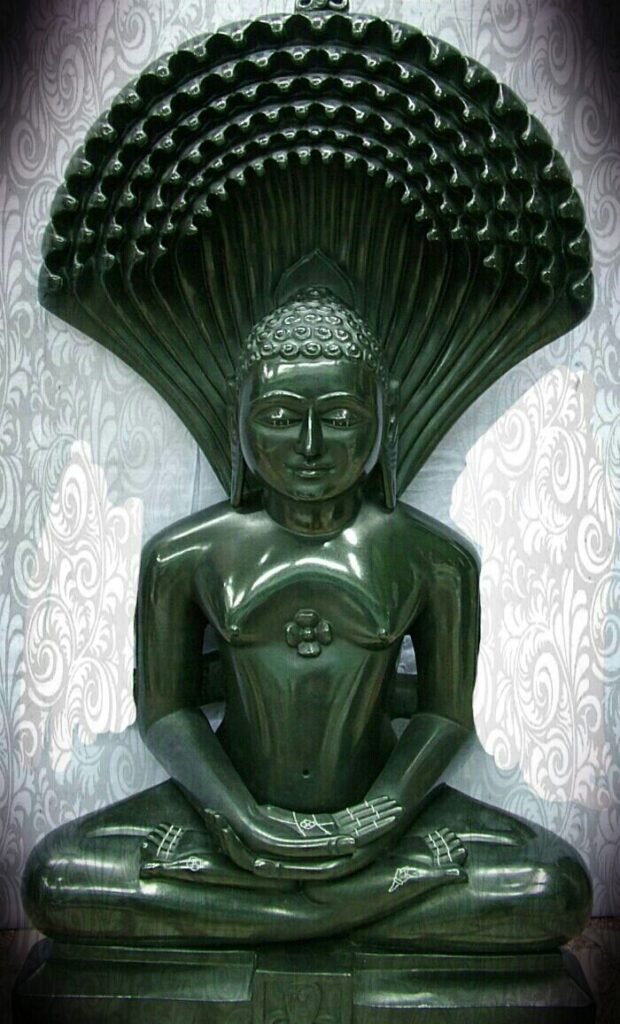
On 19th January 1980 (Mahasud 2, Saturday), the idol of Mulnayak Shri Mahavir Swami was consecrated in the sanctum, a golden opportunity granted to the Shri Laxmichand Keshavji Shah family. The adjacent sanctums were graced by the installation of idols of Shri Shantinath Bhagwan (by Shri Zaverchand Poonamchand Shah family), Shri Parshvanath Bhagwan (by Shri Jethalal Devraj Shah and Hansraj Devraj Shah), and the idol of Shri Simandhar Swami, who resides in the celestial land of Videh Kshetra, was installed in the upper sanctum by the Hariya family (H. Bharamal Vaghji Hariya). The idol of Vidhinayak Shri Neminath Bhagwan was consecrated by Mrs. Santokben Rupshi Meghji Shah, Naresh Rupshi Shah, and Narendra Rupshi Shah. All these idols were donated by Shri Kachra Narsi Shah and Shri Velji Narsi Shah families.
In 1994, Shri Kiran Harkhchand Shah proposed and funded the installation of Pujya Sadgurudev Shri Kanji Swami’s idol in the Swadhyay Hall. On 3rd September 1995 (Bhadarva Sud 9, Sunday), the Guru Pratima Sthapana ceremony was conducted by the late Shri Meghji Nathu Malde family, under the leadership of scholar Bal Brahmachari Shri Vrajlalbhai Girdharlal Shah, who came from Songadh.
To facilitate religious education for children and the youth, a new hall was constructed in 1998 and named Panch Parmeshti Hall.
The Mandal also specially acknowledges Shri Veljibhai Shah, a senior member who has been conducting scripture study sessions with great zeal for many years, and expresses sincere gratitude to him.
For the first time at the Nairobi Digambar Jain Temple, from 4th October 1999 (Bhadarva Vad 10, Monday) to 11th October 1999 (Aso Sud 2, Monday), a grand Shri Siddhachakra Mahamandal Vidhan Pooja was organized. This was performed with great devotion under the guidance of Pandit Shri Himmatbhai Dagli.
To keep such auspicious celebrations ongoing, the Mandal celebrated its Golden Jubilee with the intention that every soul attains Sat Dharma, makes effort toward Samyak Darshan, and walks the path of liberation (Moksha).